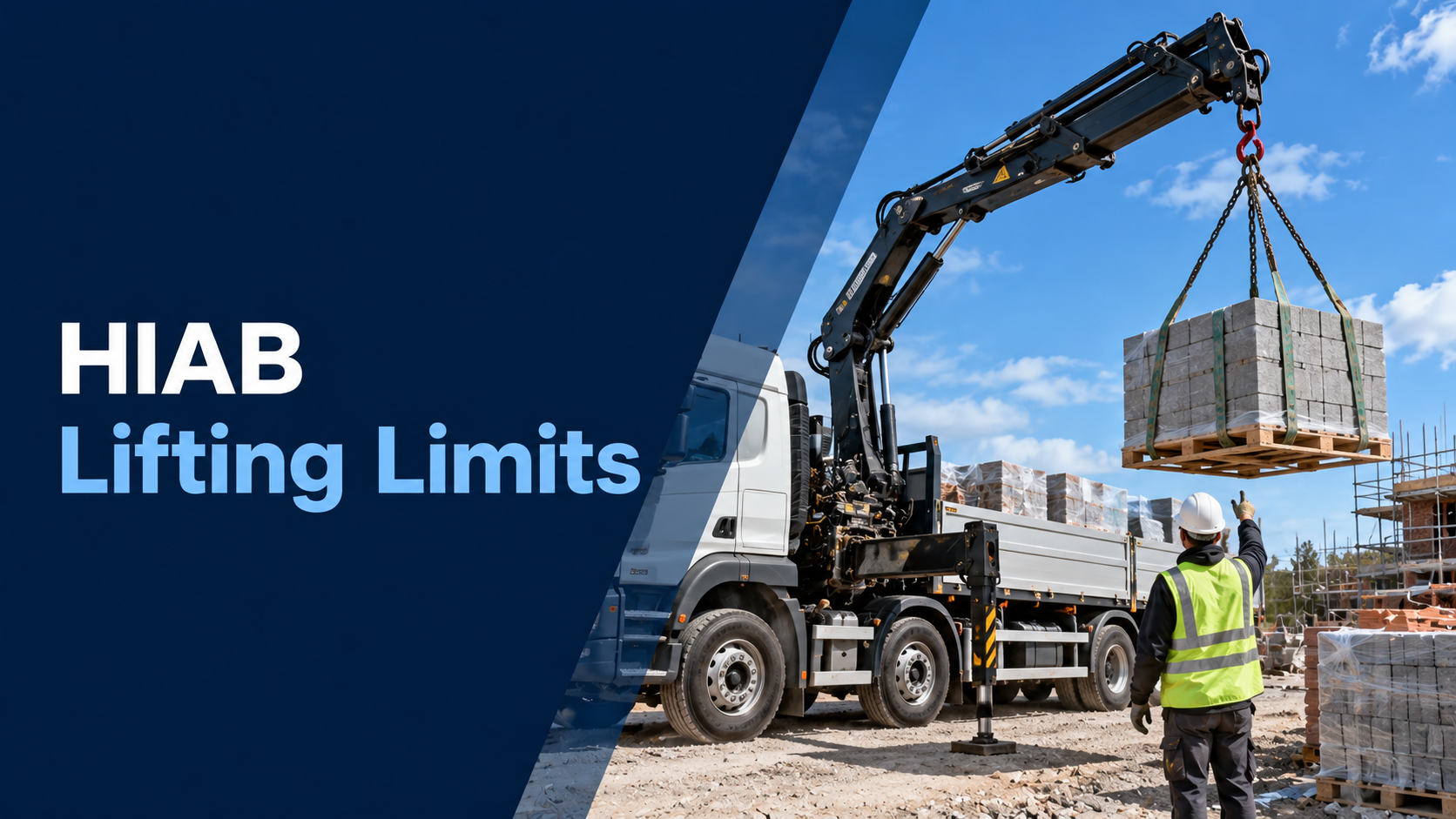

A HIAB’s lifting capacity isn’t a single number — it changes with reach. The closer the load is to the crane, the more it can lift; the further out the boom extends, the less weight it can safely handle. Our rigid HIAB lorries offer crane-assisted lifting up to 5 tonnes, but the exact figure for your job depends on reach, ground conditions, and how the load’s positioned. Tell us the weight, dimensions, and site access, and we’ll confirm what’s possible.
Picture this (well, not literally, we were told to avoid that phrase, so picture it in your own head instead): you’ve got a pallet of blocks that needs to go over a fence, a hot tub bound for the back garden, or a steel beam that has to land precisely on a set of padstones. You ring up a HIAB company and ask, “how much can your lorry lift?” and the honest answer is: it depends.
That’s not us dodging the question. It’s just how loader cranes work. Anyone who tells you a flat maximum weight without asking about reach, access, or ground conditions probably hasn’t thought it through properly. So let’s unpack what actually determines HIAB load limits, what our lorries can realistically manage, and how to plan a lift that goes smoothly the first time.
What do we actually mean by “HIAB lifting capacity”?
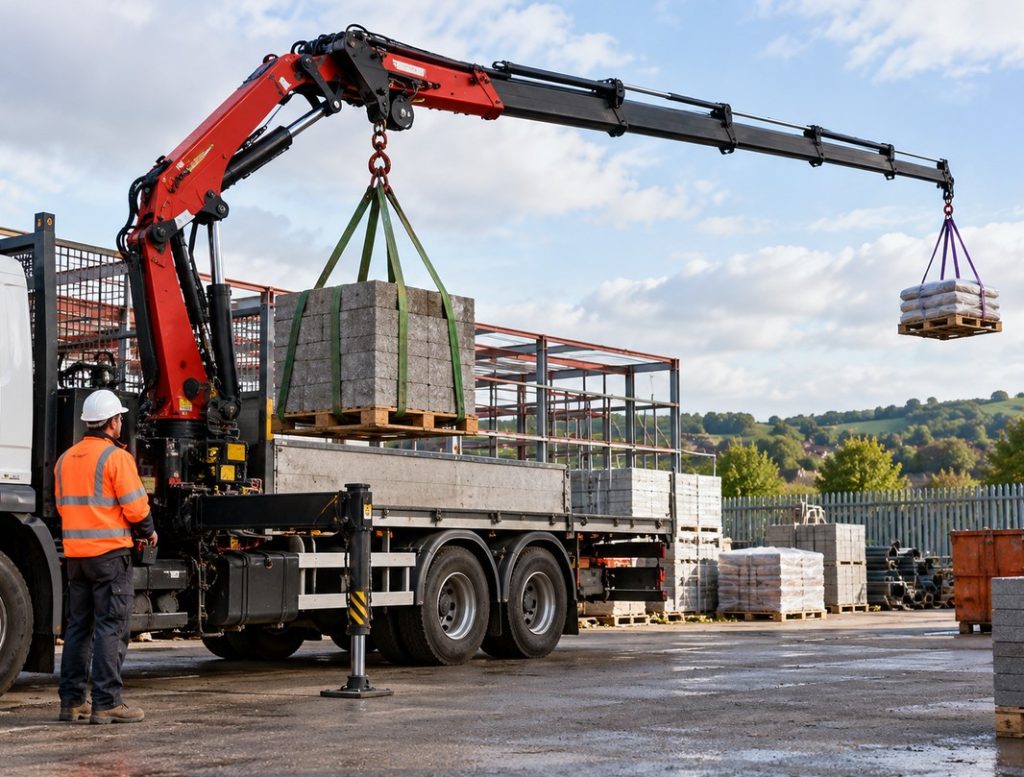
A HIAB is a lorry-mounted loader crane, and its capacity is governed by a load chart rather than one fixed weight. That chart shows the safe working load (SWL) at various distances from the crane, and it’s set by the manufacturer based on the geometry and strength of the boom.
Saying “our HIAB lifts 5 tonnes” without qualifying it is a bit like saying a car “does 150mph” without mentioning it needs a straight road, decent tyres, and ideally not a 30-tonne trailer attached. Technically true in the right conditions, misleading in most others.
The big reason capacity changes: reach versus weight
HIAB lifting capacity is usually measured in tonne-metres — the load weight multiplied by the horizontal distance from the crane. So a crane rated at, say, 10 tonne-metres might lift 2.5 tonnes at 4 metres of reach, but only 1 tonne at 10 metres.
Think about holding a shopping bag close to your chest versus holding it out at arm’s length. Same bag, same weight, but one feels a lot heavier the further it is from your body. A HIAB boom works on exactly the same principle, just with considerably more hydraulic muscle behind it. The maximum HIAB load a crane can handle is only achievable at short radius — extend the reach and that ceiling drops fast.
What our HIAB lorries can lift (and when they can’t)
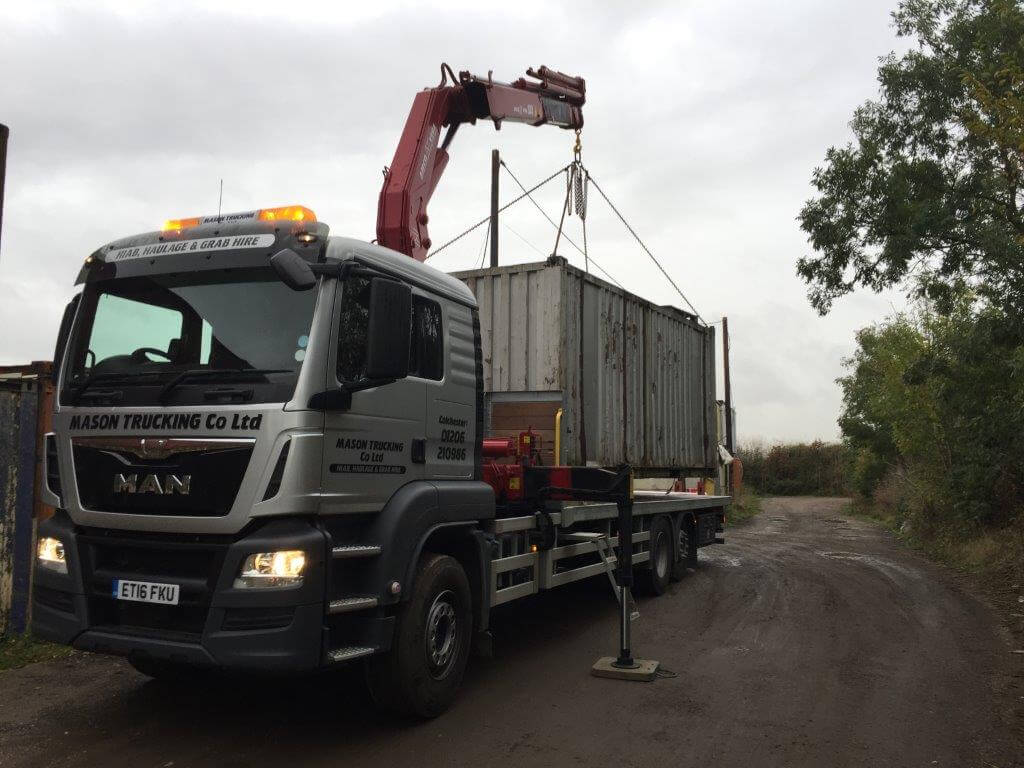
We run rigid HIAB vehicles offering crane-assisted lifting up to 5 tonnes. That “up to” isn’t small print for the sake of it — it genuinely depends on the job.
At close reach, with the outriggers fully deployed on firm, level ground, we can comfortably handle heavier loads. Push the boom further out, work around an obstruction, or set up on soft or uneven ground, and the safe figure comes down. Common real-world limiters include:
- Tight access — parked cars, narrow lanes, or overhanging trees that stop the lorry getting close to the drop point
- Restricted outrigger space — if the stabilisers can’t fully extend, the crane’s stability (and therefore its capacity) is reduced
- Ground conditions — soft verges, block paving, or freshly laid tarmac may not take the point-loading from stabiliser pads without protection
We won’t guess our way through a lift. Every job gets assessed against the load information, the site, and the crane’s actual load chart before anything’s lifted off the lorry.
Common factors that affect HIAB load limits on the day
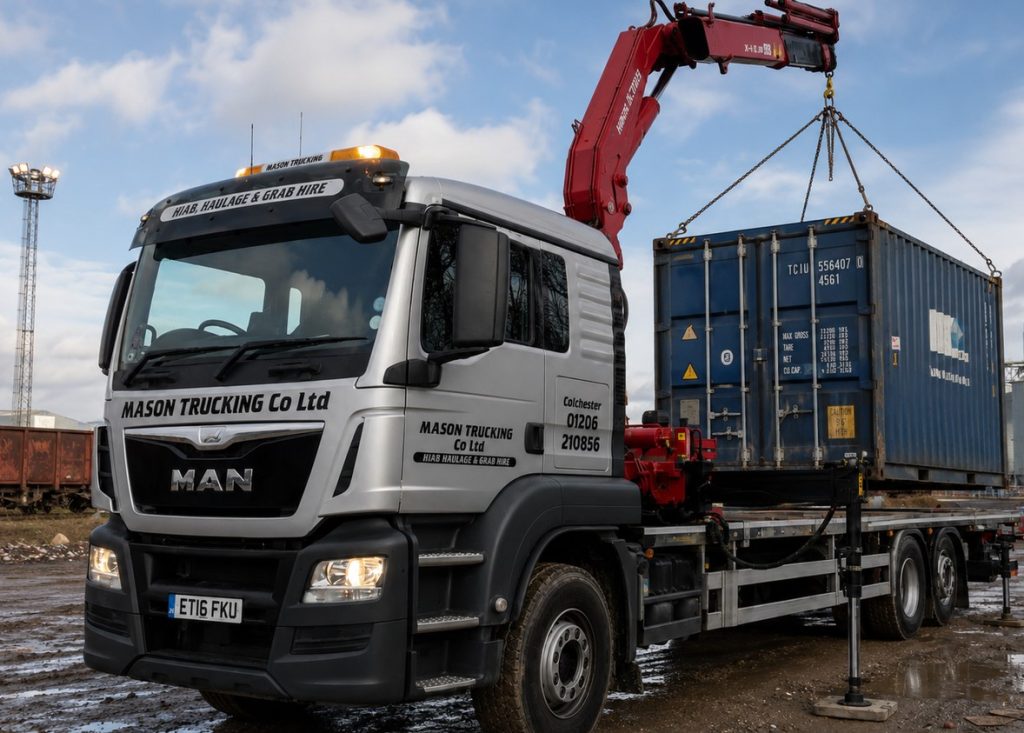
Outriggers and setup space
Outriggers (or stabilisers) spread the lorry’s weight over a wider base, which is what gives the crane its stability. Full extension means maximum capacity. If there isn’t room to deploy them fully — a narrow street, a wall in the way — the load chart for that reduced setup applies instead, and it’s always lower.
Ground conditions and stability
A stabiliser pad can transfer several tonnes of point loading into the ground beneath it. Soft ground, recent excavations, or hidden drains and culverts can all cause a leg to sink mid-lift if they haven’t been checked. We’ll often use spreader mats or boards on anything less than solid, level ground.
Load weight, shape and how it’s slung
A neat pallet is easy to plan for. A long steel beam or an awkwardly shaped tank with an off-centre weight distribution needs more thought — the wrong sling angle or lifting point can shift the load’s effective centre of gravity and catch everyone out.
Lift height, boom angle and obstructions
Lifting over a hedge, wall, or scaffold changes the geometry of the lift and can eat into available capacity even if the horizontal reach looks fine on paper. Overhead power lines are a hard limit, not a “let’s see” — we always check for these before quoting.
Attachments and added kit
Hooks, grabs, and brick grabs all have their own weight, and that weight comes off your available capacity. A 200kg grab fitted to the crane means 200kg less allowance for the actual load.
Weather and dynamic loading
Wind adds sway and unpredictability to a suspended load, particularly anything with a large surface area, like sheet materials or empty tanks. We keep an eye on forecasts and won’t push a lift in conditions that make it unsafe.
How to work out what you need without becoming a crane engineer
You don’t need to read a load chart yourself, you just need to give us the right information.
What to send us for an accurate quote
- The item’s weight (a delivery note or manufacturer spec is ideal)
- Dimensions, and whether it’s one piece or several
- Where the lorry can park and where the load needs to land
- The rough distance between the two
- Photos or a short video of the access route, driveway, or garden
- Anything obvious overhead — cables, trees, scaffolding
The quick “can we park close enough?” test
Walk the route from where the lorry would realistically park to the drop point and pace out the distance. On tighter streets around Colchester or into London, that gap is often bigger than people expect once parked cars and bins are accounted for — better to know before the lorry turns up than after.
When a HIAB isn’t the right tool
Sometimes a HIAB genuinely isn’t the best fit, whether because the reach required is too great, the ground can’t take a lorry, or the load’s simply too heavy for any loader crane to handle safely. In those cases, we’d rather say so upfront and suggest an alternative than arrive and have to walk away. That might mean a different vehicle, splitting a delivery into stages, or pointing you towards a mobile crane if the job’s beyond what a lorry-mounted crane can do.
HIAB vs grab lorry vs haulage: which do you need?
It’s worth knowing we’re not just a HIAB company. Alongside crane-assisted haulage, we run grab hire for muck away and site clearance, plus an Environment Agency-approved recycling plant handling soil, hardcore, and recycled aggregates. If your job’s more about clearing a site than lifting something onto it, a grab lorry might be the better call — happy to point you in the right direction either way.
Frequently asked questions
How much weight can a HIAB lift?
It depends on the crane’s rating and the reach required, but as a general guide, our rigid HIAB lorries offer crane-assisted lifting up to 5 tonnes at close radius under good conditions. That figure drops as the boom extends further from the vehicle.
What’s the maximum HIAB load on a typical lorry?
The maximum is only available at minimum reach with the crane in its strongest configuration. As soon as you add distance, height, or an attachment like a grab, the safe figure comes down.
Why do HIAB load limits drop as the boom extends?
It’s leverage. The further the load sits from the crane’s base, the more force it exerts on the boom and chassis, so the safe working load reduces the further out you go.
Can a HIAB lift 5 tonnes?
Ours can, under the right conditions: short reach, solid ground, and full outrigger deployment. It’s not a figure that applies to every job regardless of setup, which is why we always check reach and access first.
How do I estimate the reach needed for my lift?
Measure from where the lorry can realistically park to where the load needs to land. Account for parked cars, narrow gates, and any obstacles that might push the vehicle further back than you’d expect.
Do you need outriggers down for every HIAB lift?
For anything beyond very light loads, yes. Outriggers are what give the crane its stability, and skipping them (or only partially extending them) reduces the safe capacity considerably.
Can you lift over a fence, house, or scaffolding?
Often, yes, but it depends on the height and reach involved, plus what’s directly overhead. We’d rather check photos and measurements first than assume it’s straightforward.
What information do you need to confirm HIAB lifting capacity in the UK for my job?
Weight, dimensions, access photos, parking distance to the drop point, and details of anything overhead. That’s usually enough for us to give you a realistic answer.
Is my driveway or garden strong enough for a HIAB lorry?
Firm, level ground is ideal. Soft verges, new tarmac, or block paving can usually still work, but we may use spreader mats under the stabilisers to protect the surface and keep the lift stable.
Do you cover London and the eastern counties?
Yes. We’re based near Colchester with easy access to the A120 and A12, and we regularly cover jobs across Essex, London, and the wider eastern counties.
Ready to plan your lift?
If you’ve got a job that needs a HIAB, don’t guess at whether it’ll work; send us the weight, dimensions, and a few photos of the access, and we’ll tell you straight what’s possible. We’ve been doing this as a family-run business for 14 years, we’re fully insured (including goods in transit cover up to £100,000), and our operators are certified, careful, and genuinely good to have on site. Give us a ring or drop us your details for a no-obligation quote, and we’ll get back to you quickly.