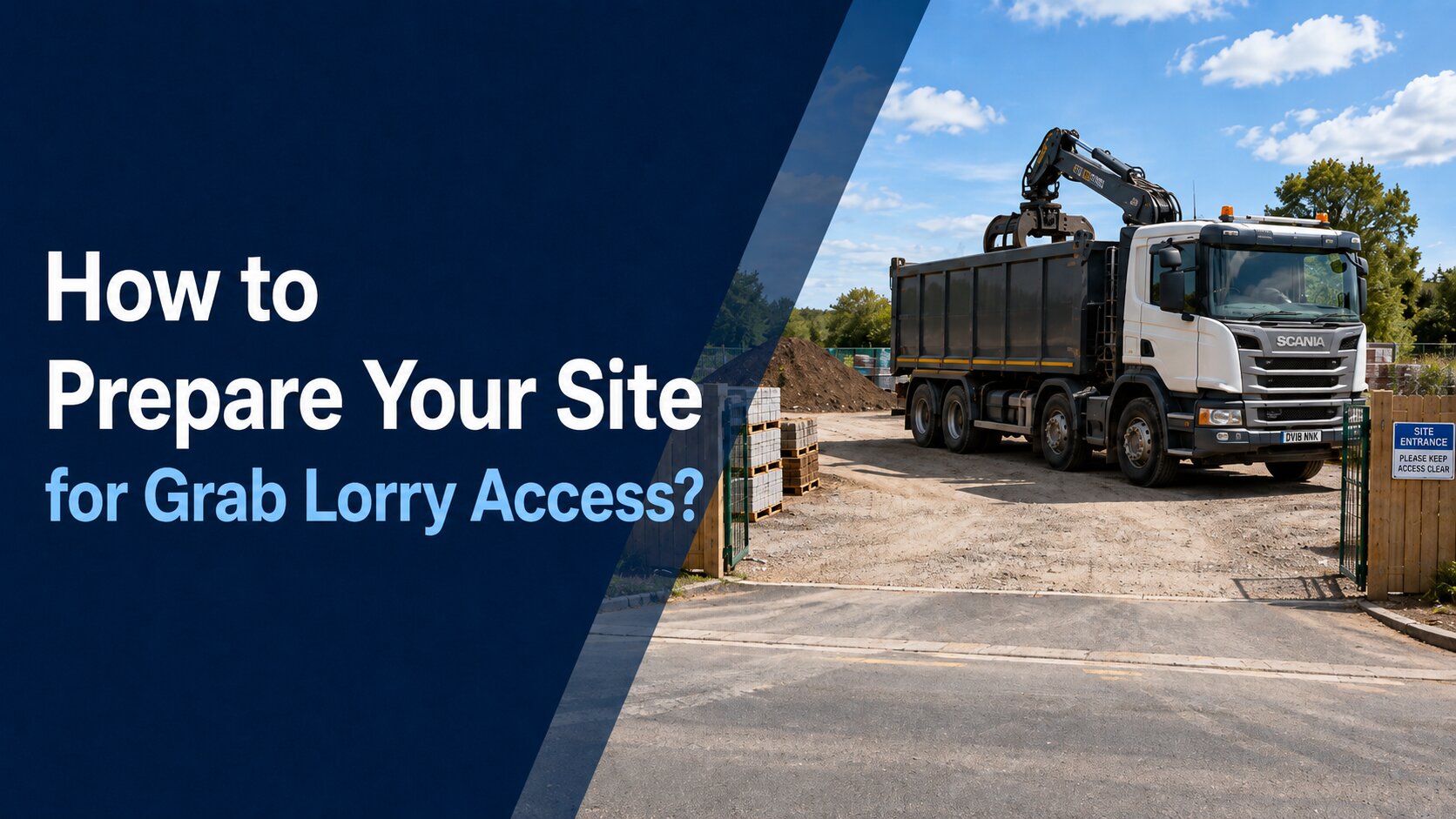

Booking a grab lorry is the easy bit. Getting it in and out of your site without drama? That’s where a little planning pays off. Whether you’re clearing muck away, arranging aggregates delivery, or tidying up after a groundworks job, the truck needs room to manoeuvre, firm ground to sit on, and a clear working area to swing its grab arm.
Here’s the honest truth we’ve learned over 14 years: access problems are the number one cause of delays, wasted call-out charges, and jobs that take twice as long as they should. A grab lorry is a big beast, and it can’t magic its way past a parked car or a low-hanging branch.
So we’ve put together this practical guide on how to prepare your site for grab lorry access. No fluff, just the space, safety and timing checks you can run today. As a family-run grab hire and haulage firm based in Marks Tey near Colchester, we handle grab lorry access UK-wide problems all the time—and most of them are avoidable with a bit of forethought.
Quick checklist for the skim-readers
If you’re short on time, here’s the short version. Before we arrive, ask yourself:
- Can the lorry get in and out safely? Think road width, gate width, tight corners and turning space.
- Is the ground firm enough? A loaded 8-wheeler can weigh over 30 tonnes.
- Are overhead hazards clear? Power lines, telecoms cables and tree branches all matter.
- Is there a safe loading or tipping zone? Somewhere level, clear, and within reach of the grab arm.
- Have you planned the timing? Consider traffic, restrictions and anyone the work might affect.
If you can tick all five, you’re in great shape. If not, read on.
Space: access, approach and the working area
Grab lorries aren’t small. Depending on the size, they run roughly 7.8 to 9.1 metres long, around 2.6 metres wide (closer to 3.2 metres once you factor in the mirrors), and about 3.7 metres tall. As a rough rule, you’ll want at least 3 metres of clear width for access, and around 6 metres of height clearance so the grab arm can do its job.
Start by picturing the whole route, not just the destination. That means the approach from the main road right through to where the truck needs to sit.
- The approach: Narrow lanes, awkward corners and parked cars are the usual culprits. If you’ve ever tried reversing a van down a tight country lane while someone glares at you from their driveway, you’ll know exactly the sort of thing we’re on about.
- Gate width and pinch points: Measure your gate, then look for the sneaky obstacles—bollards, low walls, wheelie bins, fence posts, or a skip that’s crept into the wrong spot.
- Turning arrangements: Can the lorry drive straight through, or does it need to reverse in? Is there room to reposition once it’s on site? These are the details that make or break a smooth visit.
Our tip: walk the route at the same time of day as your booking. School runs, market days and rush hour can turn a clear lane into a car park. And if you can move an obstacle beforehand, do it—then have a backup plan in case something else appears.
Ground conditions: don’t let the lorry sink
Here’s where good jobs quietly go wrong. A grab lorry is heavy, and when the grab arm is swinging loaded material about, all that weight is bearing down on the ground beneath it. Soft, waterlogged or unstable ground is asking for trouble.
Watch out for:
- Soft ground after rain—clay and wet soil are especially treacherous for heavier trucks.
- Hidden services and voids—cellars, manholes, drains and soakaways can collapse under load.
- Freshly laid driveways or block paving—a 30-tonne lorry will happily leave its mark on your brand-new drive.
If the ground’s soft, it may be worth using temporary ground protection mats to spread the load. Keep the working zone reasonably level and clear of loose debris, and flag any fragile spots to us in advance. We’d far rather know about that new patio before we roll onto it.
Safety: set up the site so everyone goes home in one piece
This is the part that matters most, so we won’t rush it.
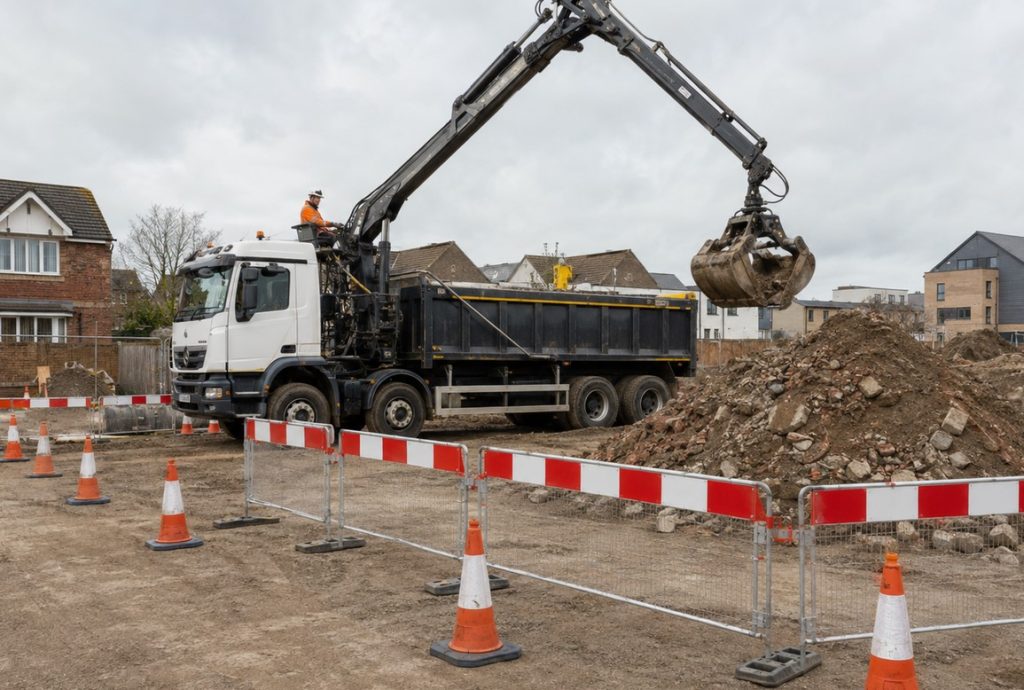
A working grab lorry needs a clear exclusion zone around it—a designated area where no one wanders in while the grab arm is moving. On busier or blind-corner sites, a banksman or spotter helps guide the driver where visibility is limited. Our operators are appropriately certified and take this seriously, but they can’t watch the whole site at once.
A few essentials:
- Keep people back. No standing beneath a suspended load, ever.
- Domestic jobs: keep children and pets safely indoors while we work.
- Construction sites: the usual PPE rules apply.
- Nominate a point of contact. One person who meets the driver and knows what’s happening on the day.
Overhead hazards you must identify first
Before we arrive, cast your eyes upwards. Power lines, telecoms cables, tree branches and scaffolding edges are all serious risks when a grab arm is extending several metres into the air. Industry guidance recommends keeping well clear of overhead power lines—generally a minimum of 6 metres unless the line has been isolated by the utility company.
If there are cables or low branches anywhere near the working area, tell us before booking. It’s not a dealbreaker most of the time, but we need to plan around it.
Timing: book smart and keep the neighbours on side
Timing is the unsung hero of a smooth job. A well-timed booking avoids traffic, parking headaches and grumpy neighbours.
Think about the UK realities:
- Busy roads and peak traffic—an access route that’s fine at 10am might be gridlocked at 8:30am.
- Parking restrictions and permit-controlled areas—if the lorry needs to occupy road space, check your local council’s rules first. In some areas you may need a parking suspension arranged in advance.
- School streets and residential timing—a quieter window makes tight access far easier.
The other big one: have everything ready. If the material’s waiting to be loaded, or the tipping area is clear and prepped, the job flies. Waiting time costs money, so a bit of prep on your end keeps your bill down.
Materials and waste: tell us what you’ve got
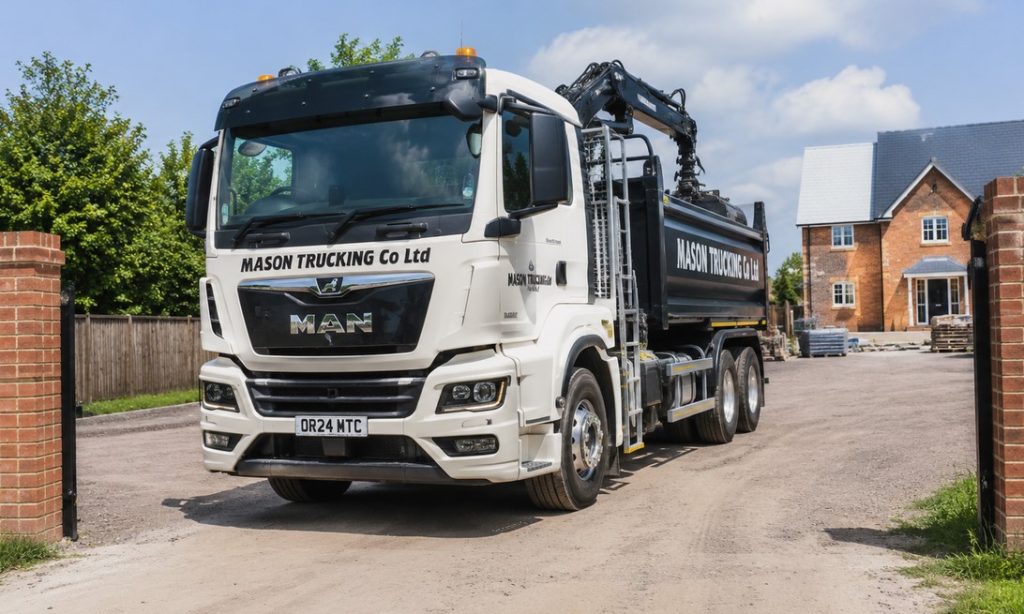
For muck away and site clearance, grab lorries handle a wide range of non-hazardous materials—soil, clay, hardcore, rubble, bricks, concrete, topsoil and green waste. What they can’t take is hazardous or prohibited waste like asbestos, chemicals, paints, gas cylinders or contaminated soil. When you get in touch, tell us what the material is, roughly how much there is, and whether it’s mixed. That helps us send the right truck first time.
For aggregates delivery, think about where the load needs to go. How close to the work area? Will it block access once it’s tipped? A little planning here saves a lot of barrowing later.
Recycling and tipping: a few Mason Trucking specifics
Here’s some useful planning info if you’re clearing a site. We operate a recycling plant approved by the Environment Agency for soil and hardcore, so your muck away is dealt with responsibly.
We also offer a free tip for hardcore and concrete, subject to conditions. Topsoil, or topsoil mixed with hardcore, can be tipped at a charge—but because our intake is limited, please contact us beforehand rather than turning up on spec. A waste carrier’s licence is required for this facility.
What to send us before we arrive
Want to make life easy for everyone? Copy this little list and send it over by email or WhatsApp:
- Site address and any access notes
- Photos or a short video of the approach, gates and work area
- Details of any overhead cables or trees
- Where you’d like us to park, load or tip
- The type and rough amount of waste or material
- Your preferred time window and any restrictions
- A site contact name and number for the day
A couple of photos genuinely tell us more than a long phone call. Send them over and we’ll give you a straight answer on whether your site’s good to go.
Frequently asked questions
What’s the easiest way to check if my site has suitable grab lorry access in the UK?
Walk the full route from the main road to the working area, note any tight spots, and take photos. Then send them to us—we’ll tell you honestly whether it’ll work or whether we need a different approach.
How much space does a grab lorry need to operate safely?
As a general guide, around 3 metres of width for access and 6 metres of overhead clearance for the arm. That said, every site’s different, so send us a photo and we’ll confirm based on your exact setup.
Can you collect mixed waste, like soil and hardcore together?
Often, yes—but it depends what’s in the mix. Let us know what you’ve got and we’ll advise. Contaminated or hazardous material is a no, though.
Do I need to be on-site when the grab lorry arrives?
Not always. If access is clear and the material’s ready, we can often crack on without you. We’ll sort the arrangements when you book.
What should I do about overhead cables or low branches?
Tell us before we arrive. We keep a safe distance from power lines, and knowing in advance lets us plan the safest position for the lorry.
Can you deliver aggregates and take muck away in the same visit?
It’s often possible and can save you a call-out charge. Ask us and we’ll confirm based on the logistics of your job.
What happens if access is blocked when the lorry turns up?
We’ll do our best to work around it, but if the truck genuinely can’t get in, we may have to reschedule and a charge could apply. This is exactly why we’re so keen on a bit of planning upfront.
Do you offer recycled aggregates and soil?
Yes—we supply a range of recycled and primary aggregates and soils. Get in touch and we’ll match the right material to your job.
Get in touch
Space, safety and timing—get those three right and your job will run like clockwork. And if you’re not sure about any of it, that’s exactly what we’re here for.
We’re a friendly, family-run team, fully insured with goods in transit cover up to £100,000, and we’re always happy to give honest advice or a no-obligation quote. Send us a few site photos and we’ll tell you straight whether you’re good to go.
Our trading hours are Monday to Friday 7am–5pm and Saturday 8am–1pm (we’re closed Sundays). Give us a shout—we’d love to help.