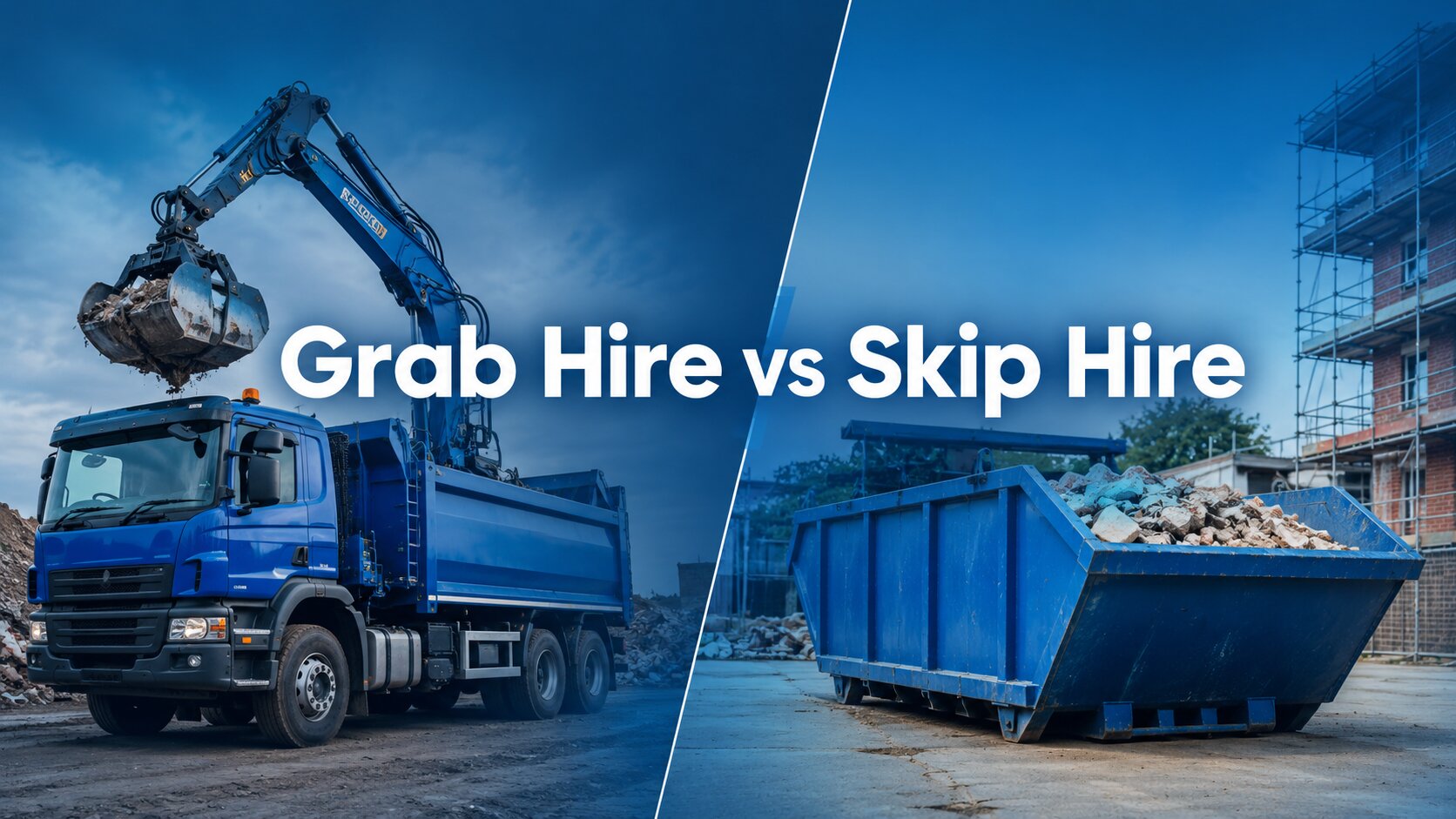

We’ve all been there. You’ve just knocked down that old conservatory, or maybe you’ve finally tackled the jungle that was your back garden. Now, you’re standing in front of a pile of rubble that looks suspiciously larger than Mount Everest, scratching your head and thinking, “How on Earth do I get rid of this?”
Managing waste streams — it’s the classic homeowner’s dilemma. Do you order a skip and spend your weekend perfecting your discus throw with bricks? Or do you call in the heavy artillery?
At Mason Trucking, we know waste removal isn’t exactly the most glamorous part of your project, but it’s definitely one of the most important. As a family-run business operating for over 14 years, we’ve seen our fair share of waste woes. Whether you need a grab lorry hire UK service or you’re weighing up your waste removal options UK wide, making the right choice can save you time, money, and a whole lot of backache.
So, let’s settle the debate once and for all: grab hire vs skip hire—which one deserves the gold medal for your project?
What is grab lorry hire?
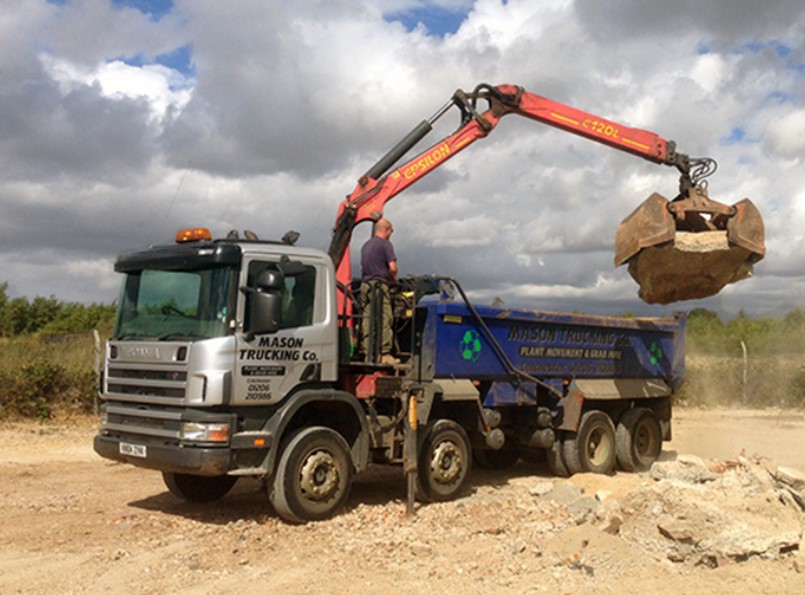
If you’ve never seen a grab lorry in action, imagine a giant mechanical arm that scoops up waste like a hungry dinosaur eating its dinner. That’s grab hire in a nutshell.
A grab lorry is essentially a large truck equipped with a hydraulic grab arm and bucket. It pulls up to your site, extends its arm over fences or walls, picks up your waste directly from the ground, and loads it into the back of the lorry.
The benefits of grabbing it
The biggest perk? You don’t have to lift a finger. Well, maybe just to dial our number, but that’s it. There’s no loading involved on your part. You just pile your waste in an accessible spot, and the lorry does the rest. It’s quick, efficient, and saves your back from unnecessary strain. Plus, grab lorries have a huge capacity—typically carrying around 16 tonnes of waste, which is roughly equivalent to two or three large skips.
Best scenarios for grab hire
Grab hire is the heavyweight champion for:
- Large construction sites: Where volume is king.
- Driveway excavations: Large quantities of soil and concrete? No problem.
- Projects with tricky access: If you can’t get a skip on the driveway but a lorry can reach over a wall to get the waste removed, grab hire is your answer.
- Bulk waste removal: When you have far more rubbish than a standard skip can handle.
What is skip hire?
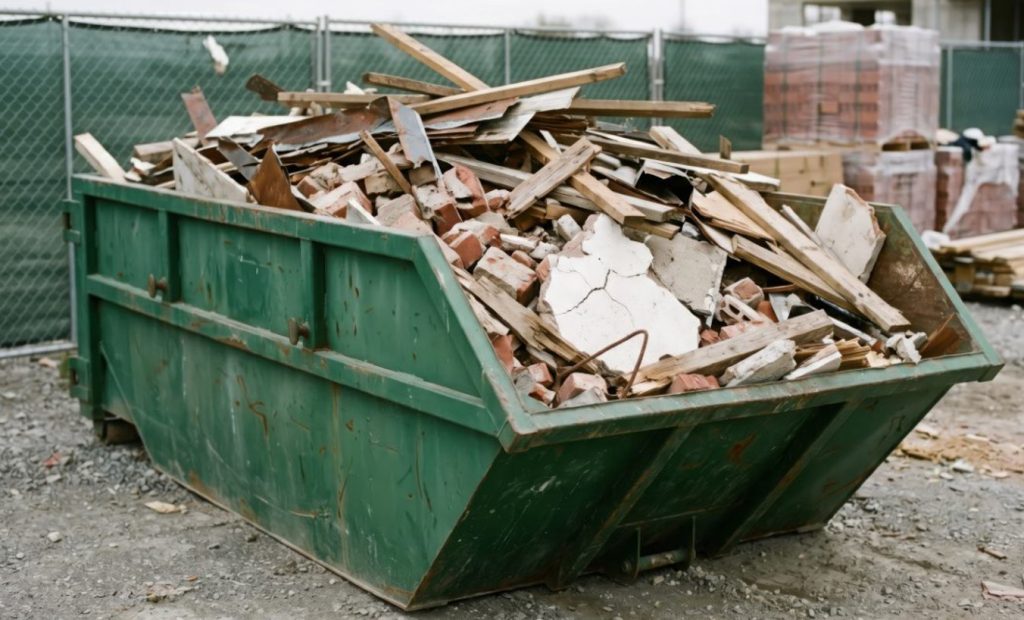
On the other side of the ring, we have the trusty skip. You know the one—the big yellow (or sometimes red) metal box that sits on your driveway for a week or two, slowly filling up with everything from broken tiles to that old sofa you swore you’d upcycle.
Skip hire involves a company dropping off a container at your property. You fill it up at your own pace, and when you’re done (or when it’s overflowing), the company comes back to collect it.
The benefits of skipping
Skips are great for pace. If you’re doing a slow renovation and generating waste bit by bit, having a skip on-site means you can keep things tidy as you go. They come in various sizes, from mini skips for small garden clear-ups to massive roll-on roll-off containers for commercial jobs.
Best scenarios for skip hire
Skip hire tends to be the go-to for:
- Home decluttering: Clearing out the garage or attic.
- Kitchen or bathroom refits: Throwing things in as you rip them out.
- Small garden clearances: When you have a manageable amount of green waste.
- Projects where waste is generated slowly/long term projects: Keeping a site clean over a few weeks.
Grab hire vs skip hire: key differences
Now that we’ve met the contenders, let’s see how they stack up against each other.
Accessibility
This is where grab hire often takes the lead. Skips need to be placed somewhere flat and stable—usually a driveway or the road. If you put a skip on the road, you’ll need a permit (more on that later), and you might annoy the neighbours by taking up a parking spot.
A grab lorry, however, just drives up, extends its hydraulic arm, and scoops the waste up from behind a fence, wall, or hedge. It doesn’t need to stay on-site; it’s there for 20 minutes, then it’s gone.
Waste volume
Standard builder’s skips (6-8 yards) hold a decent amount, but they fill up faster than you’d think—especially with bulky items. A typical grab lorry can hold around 12 to 15 cubic metres of waste. To put that in perspective, you’d need about two and a half 8-yard skips to match the capacity of one grab lorry. If you have a lot of heavy waste like soil or rubble, grab hire is often the more economical choice.
Labour
This is the “sweat factor.” With a skip, you are the engine. You have to wheelbarrow or carry every single brick and bag into that container. With grab hire, your job is simply to leave the waste in a pile. The operator does the heavy lifting with the crane. If you value your weekends (and your lumbar region), grab hire wins hands down.
Cost
Comparing costs can be tricky because it depends on location and waste type. However, for large volumes of waste (especially heavy materials like soil/hardcore), grab hire is usually cheaper per tonne than hiring multiple skips. Plus, you don’t have to pay for road permits with a grab lorry since it doesn’t park up for days.
Convenience
Skips offer the convenience of time—you can keep them for a week or two. Grab lorries offer the convenience of speed—waste is gone in minutes. It really depends on whether you want the rubbish gone immediately or if you need a place to store it while you work.
Which is best for your project?
Still on the fence? Let’s break it down by project type.
Construction sites
For commercial construction, grab hire is usually the winner. The sheer volume of waste generated—especially soil, bricks, and concrete—makes skips inefficient. A grab lorry can clear a site quickly, keeping the area safe and tidy for workers. Plus, at Mason Trucking, we can deliver recycled aggregates when we come to collect your waste, saving you a transport run.
Home renovations
If you’re ripping out a kitchen or bathroom yourself over a few weekends, skip hire might be better. It gives you a dedicated dumping ground while you work. However, if you’ve demolished a wall and have a massive pile of bricks on the driveway ready to go? Call the grab lorry.
Garden clearances
For a full landscape overhaul where you’re digging up turf and soil, grab hire is excellent. Shovelling tonnes of heavy soil into a skip is back-breaking work. Piling it up for a grab lorry to collect is much easier. For lighter pruning and grass cuttings, a smaller skip or even a skip bag might suffice.
Limited space
If you have no driveway and live on a busy road with parking restrictions, a skip can be a nightmare of permits and cones. A grab lorry can pull up alongside the kerb, reach over your front wall, grab the waste, and leave without ever needing a parking bay suspension.
Additional considerations
Before you make your final decision, there are a few boring-but-important legal bits to consider.
Permits
If you hire a skip and it needs to go on a public highway (road or pavement), you legally need a skip permit from your local council. This costs money and takes time to arrange. Grab hire vehicles are road-legal trucks that don’t require permits to load, provided they don’t cause an obstruction for an unreasonable amount of time.
Waste types
Skips have strict rules on what you can put in them. No hazardous waste, no asbestos, no tyres, no fridges, and usually no plasterboard mixed with other waste. Grab lorries have similar restrictions—we can’t grab hazardous materials mixed with soil. Always check with us first if you’re unsure.
Environmental impact
We all want to do our bit. Responsible waste disposal is key. At Mason Trucking, we operate a recycling plant approved by the Environment Agency. We recycle soils, hardcore, and concrete, ensuring that as little as possible ends up in landfill. Whether you grab it or skip it, make sure your provider is a licensed waste carrier.
FAQ
Do I need a permit for a skip?
If the skip is on your private land (like a driveway), no. If it’s on a public road, yes, you absolutely do. Your skip hire provider usually arranges this for you, but the cost is added to your bill.
How much waste can a grab lorry hold?
Our grab lorries typically generally hold 16 tonnes of waste. In terms of volume, that’s roughly 12-15 cubic metres, depending on what you’re throwing away. Think of it as equivalent to two large builder’s skips.
Can I mix different types of waste in a skip?
Generally, yes, for general mixed waste. However, strict rules apply to things like plasterboard, electricals, and hazardous materials. These usually need to be separated. If in doubt, give us a bell.
Conclusion
So, who takes the crown in the battle of grab hire vs skip hire?
If you want a leisurely clear-out and have space on your drive, the humble skip is a solid choice. But if you have a mountain of heavy waste, tricky access, or simply value your spine, grab hire is the undisputed champion of efficiency and capacity.
At Mason Trucking, we’re not just about shifting muck. We’re a family-run business that prides itself on being polite, professional, and reliable. Whether you need a 5-ton HIAB lift, a load of recycled aggregates, or a grab lorry to make that rubble pile disappear, we’ve got the kit and the expertise to handle it.
Get a free quote today by getting in touch with our friendly team who will offer you the right solution at cost effective prices.